


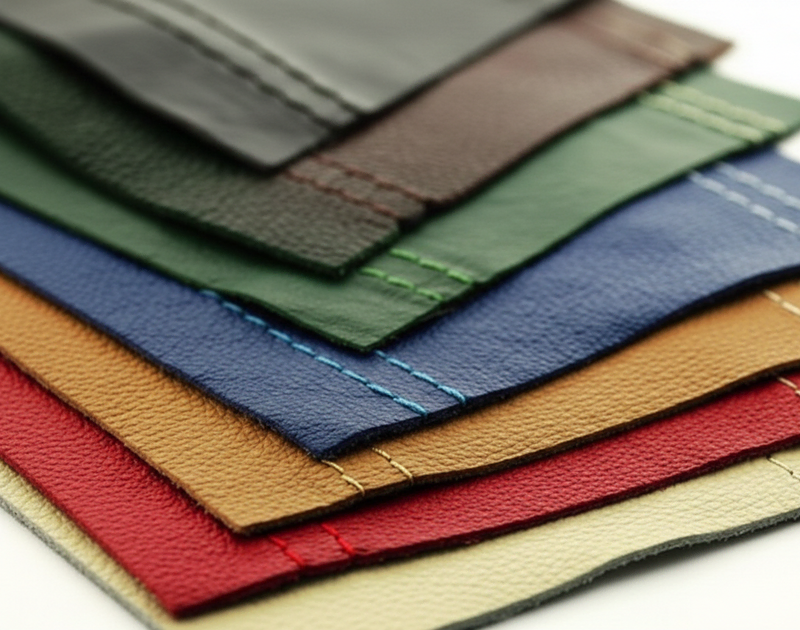
The best sofa reupholstery fabrics in 2026 are Crypton, performance velvet, and microfiber — they combine high durability (50,000+ double rubs), easy cleaning, and good looks. For families with children and pets, Crypton or faux leather are strong choices. For a more decorative piece that sees lighter use, natural linen or standard velvet work well. Here's a detailed breakdown of every option.
What you need to know before choosing a fabric
Before you open a catalog or walk into a fabric store, it's worth getting clear on three fundamentals. Most reupholstery disappointments come down to choosing a fabric without understanding these basics — a beautiful material that starts falling apart within a year is a common and avoidable mistake.
Double rub count — the primary durability metric
Double rub count is the industry-standard measure of fabric durability. Each "double rub" simulates one cycle of mechanical friction against the fabric surface. In the US, this is typically measured using the Wyzenbeek test (rubbing cotton duck cloth across the sample); in Europe, the Martindale test is more common (a circular motion with wool felt). These are different methodologies, so the numbers aren't always directly comparable — worth keeping in mind when reading specs.
Here's how to read the numbers:
- Under 15,000 rubs — lightweight decorative fabric, suitable only for pillows or accent pieces that see minimal use
- 15,000–30,000 — moderate durability, fine for a bedroom or guest room sofa used occasionally
- 30,000–50,000 — solid choice for living room furniture with regular everyday use
- 50,000 and above — high-traffic fabrics for living rooms, family rooms, home offices
- 100,000 and above — commercial-grade durability, found in Crypton and high-quality microfiber
One important caveat: double rub count measures abrasion resistance only. It tells you nothing about stain resistance, UV fading, or how the fabric holds its shape. A complete fabric assessment requires looking at several characteristics together.
Cleaning codes: W, S, WS, and X
Every upholstery fabric carries a cleaning code — one of the most practical things to check before buying. Spill coffee on a sofa with an S-coded fabric and try to clean it with water, and you'll end up with a water stain on top of the coffee stain.
- W (Water) — cleans with water-based products. The most convenient option for everyday life
- S (Solvent) — dry-cleaning solvents only. Water can leave marks or distort the fabric
- WS (Water/Solvent) — both methods work. Versatile and easy to live with
- X — vacuum only, no moisture whatsoever. Rarely recommended for sofas in living spaces
For any sofa in an actively used room, stick to W or WS. Anything else makes daily life unnecessarily complicated.
Natural fibers vs. performance fabrics
This is the fundamental choice that shapes everything else. Natural fabrics — linen, cotton, wool, silk — are valued for breathability, tactile comfort, and a quality of texture that synthetics can't quite replicate. The trade-off is that they require more careful maintenance, often don't respond well to moisture, and generally offer lower double rub counts.
Performance fabrics have been engineered — either through technological treatment or from purpose-built synthetic fibers — to solve those problems. They can look and feel almost identical to natural materials while repelling water, resisting stains, and lasting significantly longer. In 2025, the gap between the two has narrowed considerably. The difference becomes obvious only when something spills.
Sofa reupholstery fabrics: a full breakdown
A detailed look at each material — real-world properties, trade-offs, and who it works best for. Durability figures reflect current industry practice.
Microfiber (polyester)
Microfiber is one of the most widely used materials for furniture upholstery across the mid-to-high durability range. It's made from ultra-fine polyester threads — several times thinner than a human hair — which gives it the softness of suede at a fraction of the cost.
Durability: 50,000–100,000 double rubs. Cleaning code: typically W or WS.
Pros: high durability, resists most everyday stains, easy to maintain, affordable, low allergen retention on smooth versions.
Cons: two types exist and they behave differently. Smooth (suede-like) microfiber wipes clean easily and pet hair comes right off with a damp hand. Plush or velvety microfiber traps hair in its pile and holds onto it. Always clarify which type you're getting. In high-pressure zones — seat cushions, armrests — low-quality microfiber can develop worn patches over time.
Best for: families with children on a budget, allergy-prone households (smooth version), anyone who wants low-maintenance durability without spending a lot.
Velvet — standard and performance
Velvet is a short-cut-pile fabric that signals luxury: rich, saturated color, a surface that catches the light, the kind of texture that looks expensive in a room. Interior designers love it. The problem is that "velvet" covers two very different products, and choosing the wrong one is an expensive mistake.
Standard velvet (cotton or silk) sits at 15,000–25,000 double rubs. It's beautiful but fragile — marks easily, shows every fingerprint, requires professional cleaning. Reserve it for furniture that's meant to look good rather than be used daily.
Performance velvet is an entirely different material. Made from dense polyester pile, it holds up to 30,000–100,000+ double rubs, cleans with water (code W), and resists most stains. One realistic note: any velvet, including performance versions, can develop compression marks in the seat zone over time. Performance versions are significantly more resistant to this, but not immune.
Best for: performance velvet works for most households. Standard velvet belongs in adult-only homes with minimal daily use and no pets.
Natural linen and performance linen
Linen has a quality of texture that's genuinely hard to fake. It breathes, ages beautifully, and develops a soft patina that makes it look better with time — something no synthetic can quite reproduce. That's why it stays popular despite its limitations.
Natural linen comes in at 15,000–20,000 double rubs (blended linen — mixed with polyester — can perform higher; always check the fiber composition). It absorbs moisture, wrinkles, and typically carries a cleaning code of S, meaning water is off-limits. A glass of wine on a natural linen sofa in your living room is a problem with no easy solution.
Performance linen solves most of these issues. It's more structured, holds its shape better, delivers 30,000–50,000 rubs, and accepts wet cleaning (WS). The texture reads as linen — the behavior doesn't.
"Natural linen is like a white dress shirt. Looks perfect. Nobody wears it to a construction site" — that's roughly how experienced upholsterers explain it to clients who insist on natural linen for a family living room sofa.
Best for: natural linen belongs in studies, guest rooms, or low-traffic upholstered pieces in adult-only homes. Performance linen is the practical middle ground for families who want that natural look without permanent stains.
Cotton and cotton twill
Cotton is the most accessible natural upholstery fiber. Comfortable, breathable, takes color and pattern well. It holds dye reasonably well compared to some fabrics, though it doesn't match solution-dyed acrylics for UV resistance.
Standard cotton runs 15,000–30,000 double rubs depending on weave density. Its main weakness is absorbency — coffee, grease, and wine penetrate quickly and need immediate attention.
Twill is a diagonal-weave variation that's noticeably more durable and more resistant to staining than plain cotton. When a client insists on natural cotton, most professional upholsterers steer them toward twill.
Best for: budget-conscious buyers for moderately used furniture. A professional stain-repellent treatment applied before use makes a meaningful difference.
Chenille
Chenille has a looped, textured pile — "caterpillar" in French, which is exactly what the yarn looks like in cross-section. That tactile depth gives it a warmth and coziness that few other fabrics match. Modern chenille is often made from acrylic-polyester blends, which pushes durability up to 20,000–50,000 double rubs.
Pros: tactile comfort, rich appearance, good color retention.
Cons: the looped pile is a snag waiting to happen. A zipper, a ring, a cat's claw — any of these can catch the pile and pull. It also accumulates dust and needs regular vacuuming. Definitely not a pet-household fabric.
Best for: a cozy sofa in a calm room — no cats, no young children who use it as a trampoline.
Full-grain leather and faux leather (PU)
Full-grain leather occupies its own category. It's the only upholstery material that genuinely improves with age — it develops a patina, softens, and conforms to the shape of whoever uses it. With proper care, a leather sofa lasts 25–30 years or longer.
A technical note worth making: leather is not typically tested using Wyzenbeek or Martindale in the way fabrics are. It's evaluated by different standards, so comparing it to fabrics using double rub numbers isn't meaningful. What's accurate to say is that it's exceptionally durable.
Practical advantages: stains wipe off the surface (if caught in time), pet hair doesn't cling to it, it doesn't trap allergens, and odors don't soak in. Downsides: the price, the cold-in-winter feel, and the fact that sharp objects and cat claws leave permanent marks.
Faux leather (PU) looks the part at a fraction of the cost. It cleans easily, holds up to 30,000–60,000 double rubs, and is genuinely practical. The honest caveat: in real living conditions — central heating, seasonal humidity changes, constant friction on seat areas — quality faux leather typically starts cracking and peeling after 3–6 years of active use. Seven to twelve years is the marketing upper bound for ideal conditions and premium materials. Plan for 3–6 years as a realistic working lifespan.
Best for: full-grain leather is a long-term investment for those who want to buy once and forget about it. Faux leather is a practical budget option — just go in with realistic expectations about longevity.
Crypton and local alternatives: what to actually look for
Crypton is a patented American technology, not a specific fabric type. Each fiber is coated with a protective polymer before weaving — the protection is built into the structure, not applied on top. This is the key distinction from ordinary stain-resistant fabrics: the barrier doesn't wash away over time.
The result: liquids don't penetrate the fiber. Bacteria and odors can't build up inside the material. The fabric stays breathable — unlike film-based coatings. Stain resistance holds across the fabric's entire lifespan (though aggressive solvent-based cleaning can gradually degrade the protective properties over time).
The practical reality in Georgia and most of Europe: original Crypton is hard to source and expensive when you find it. What to ask for instead:
- AquaClean (Spain) — one of the best widely available alternatives. Most stains come out with water alone. Wide range of textures and colors.
- EasyClean and SmartClean — broad marketing terms used by various manufacturers for fabrics with similar barrier protection. Ask whether the protection is built into the fiber or applied to the surface — it matters.
- Teflon coating (DWR/Teflon) — applied to finished fabric. Works, but it's a surface treatment — effectiveness diminishes with cleaning and wear.
Best for: families with young children, pet owners, allergy sufferers. Also excellent for people who like eating breakfast and watching films on their sofa.
Sunbrella, Dralon, and solution-dyed acrylics
Sunbrella is the best-known brand of solution-dyed acrylic fabric. The key to understanding it is the technology: dye pigment is introduced into the molten acrylic fiber before it's formed into thread — the color is literally part of the fiber structure, not applied to the surface. This makes UV fading essentially impossible.
Sunbrella doesn't shrink when wet, resists mold and mildew, and can be cleaned with a diluted bleach solution — a capability no natural fabric offers. Durability sits at 30,000–50,000+ double rubs, which is solid real-world performance. (You'll sometimes see "no wear" claims in marketing materials — this is an exaggeration. The fabric does wear; it just does so slowly and resists environmental degradation exceptionally well.)
In Europe, German brand Dralon offers comparable performance for outdoor and high-sun applications.
Best for: sofas on glazed balconies, open terraces, sunrooms, or any room with significant direct sunlight. Also a strong choice for high-humidity spaces.
Sofa reupholstery fabrics: comparison table
Key parameters for all materials covered above. Prices are approximate for the Georgian market in 2025 (exchange rate: 1 USD ≈ 2.75 GEL).
| Fabric | Durability (rubs) | Stains | Cleaning | Pets | Price/m² (USD / GEL) | Best for |
| Smooth microfiber | 50,000–100,000 | Good | Easy (W) | Good | $7–20 / 19–55 ₾ | Budget, families, allergy sufferers |
| Standard velvet | 15,000–25,000 | Poor | Difficult (S) | Poor | $15–40 / 41–110 ₾ | Decorative, low-use pieces |
| Performance velvet | 30,000–100,000 | Good | Easy (W/WS) | Good | $20–65 / 55–179 ₾ | Most household types |
| Flock (anti-scratch) | 25,000–40,000 | Good | Easy (W) | Excellent | $8–25 / 22–69 ₾ | Cats, children, active use |
| Natural linen | 15,000–20,000 | Poor | Difficult (S) | Poor | $12–35 / 33–96 ₾ | Adults only, low-traffic |
| Performance linen | 30,000–50,000 | Fair | Fair (WS) | Fair | $25–55 / 69–151 ₾ | Active families who want a natural look |
| Cotton / twill | 15,000–30,000 | Fair | Fair (W) | Fair | $8–25 / 22–69 ₾ | Budget, moderate use |
| Chenille | 20,000–50,000 | Fair | Fair (WS) | Poor | $15–40 / 41–110 ₾ | Cozy rooms, no cats |
| Full-grain leather | Exceptionally high* | Excellent | Easy | Fair | $55–220 / 151–605 ₾ | Long-term investment, adults |
| Faux leather (PU) | 30,000–60,000 | Excellent | Easy | Fair | $15–40 / 41–110 ₾ | Budget option, 3–6 years active life |
| Crypton / AquaClean | 50,000–100,000+ | Excellent | Very easy (W) | Excellent | $20–65 / 55–179 ₾ | Children, pets, allergy sufferers |
| Sunbrella / Dralon | 30,000–50,000+ | Good | Very easy (W) | Good | $25–65 / 69–179 ₾ | Balcony, terrace, direct sunlight |
* Full-grain leather is evaluated using its own durability standards, not the Wyzenbeek / Martindale tests used for fabrics. A direct comparison in double rubs is technically incorrect. With proper care, leather lasts 25 years or more. Prices approximate for the Georgian market, 2025. Exchange rate: 1 USD ≈ 2.75 GEL.
Choosing fabric for your lifestyle
Technical specs matter, but the real decision always comes down to your specific situation at home. Here are the most common scenarios.
Sofas with cats or dogs
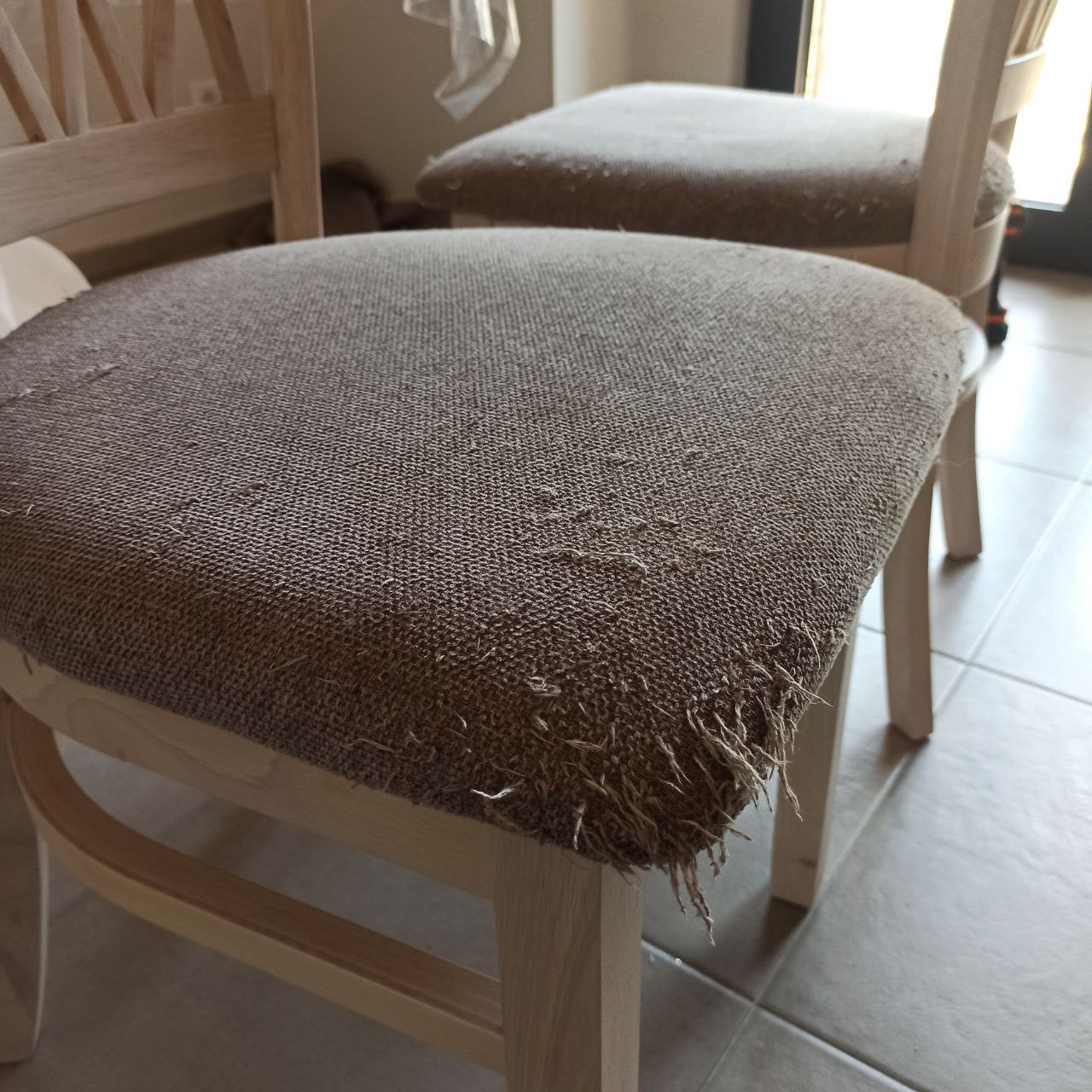
Pets create several distinct threats to upholstery simultaneously: claws leave snags and scratches, hair embeds in pile, and saliva and odors soak into fibers. Choosing fabric for a home with pets means addressing all of these at once.
The best options for pet households:
- Flock (anti-scratch fabric) — the short, glued-on pile gives claws nothing to grip. Most cats stop scratching flock surfaces within a few days. Best choice specifically for cat owners.
- Crypton / AquaClean — a complete barrier against odors and moisture, fur vacuums off easily, no paw-print absorption. Best for dogs.
- Performance velvet with dense pile — scratch marks are less visible on matte velvet than on smooth leather, though snags will appear eventually.
What to avoid in pet households: standard velvet (claws create instant permanent snags), natural linen (absorbs odors deeply), chenille (the looped pile catches on everything).
Homes with young children
The main risk with children is stains from every conceivable source — food, drinks, markers, clay. The secondary factor is accelerated physical wear: kids jump, climb, and grind fabric against surfaces in ways adults don't.
Best fabrics for homes with children:
- Crypton / AquaClean — built for exactly this scenario. Most stains — including marker and fruit juice — come out with water if addressed quickly.
- Dense-weave microfiber — good stain resistance, high double rub count, affordable enough that normal wear isn't a crisis.
- Leather — stains wipe off easily, genuinely durable. The vulnerability is sharp objects and concentrated pressure.
Allergy sufferers and sensitive skin
Pile fabrics — velvet, chenille — accumulate more allergens, dust mites, and mold spores than smooth materials. This doesn't mean avoiding them entirely, but it's worth factoring in.
Best choices for allergy-prone households:
- Smooth microfiber — doesn't trap dust and mites the way pile fabrics do. Easy to clean. Note: it's not inherently anti-static — that depends on the specific treatment applied to the fabric.
- Full-grain leather — smooth surface, allergens don't accumulate.
- Crypton — the barrier technology prevents liquids and bacteria from penetrating the fiber, which reduces allergen buildup over time. This isn't a medical-grade guarantee — it won't make your sofa sterile — but it makes a practical difference.
Regardless of fabric choice: regular vacuuming with a HEPA filter does more for allergen control than any single material decision.
Sofas near windows: fighting UV fade
Direct sunlight degrades most upholstery fabrics over time. Natural fibers — especially linen and silk — and surface-applied dyes can start visibly fading within months of intense UV exposure.
If your sofa gets significant direct sun:
- Sunbrella and other solution-dyed fabrics — the only materials with genuinely reliable UV resistance. Pigment is part of the fiber structure; there's nothing on the surface to fade.
- Performance fabrics with UV stabilizers — many manufacturers add these. Look for it specifically in the technical spec sheet.
- Cotton — among natural fibers, it holds color reasonably well relative to linen and silk, but it still falls well short of solution-dyed acrylics under strong sun.
Balconies, terraces, and high-humidity spaces
Glazed balconies, open terraces, saunas, or any semi-outdoor space create conditions that standard upholstery fabrics aren't designed for: temperature swings, humidity, and the possibility of getting wet. Most fabrics in these conditions develop mold, shrink, or lose their shape relatively quickly.
- Sunbrella / Dralon — doesn't shrink when wet, mold-resistant, can be cleaned with a diluted bleach solution.
- Polypropylene (olefin) — the material used in commercial outdoor furniture. Exceptional resistance to moisture, mold, and UV.
Important: even outdoor fabrics need to dry out properly after getting wet. Don't leave damp upholstery sealed or closed — mold can develop even on moisture-resistant materials.
How much fabric do you need for sofa reupholstery
Fabric quantity is one of the most practical questions when planning a reupholstery project. Running short mid-job is an expensive problem: buying from a different production batch — even the same pattern and color — can result in a slight shade variation that's visible once the sofa is done.
Upholstery fabric typically comes in rolls 140–160 cm wide. Quantity is calculated in linear meters of that width.
Approximate fabric requirements (at 140 cm width):
- Two-seat sofa (up to 160 cm long) — 7–10 linear meters
- Standard three-seat sofa (160–200 cm) — 10–14 linear meters
- Large sectional sofa — 15–25 meters, depending on configuration
- Sofa bed with pull-out mechanism — add 2–3 meters to the base calculation
Always add 10–15% extra to your calculated quantity for seams and cutting errors. For patterned fabric with a repeat, increase that buffer to 20% — the upholsterer needs to match the pattern at every seam. Your upholsterer will give you a precise figure after examining the sofa.
Reupholster vs. buy new: which makes more sense
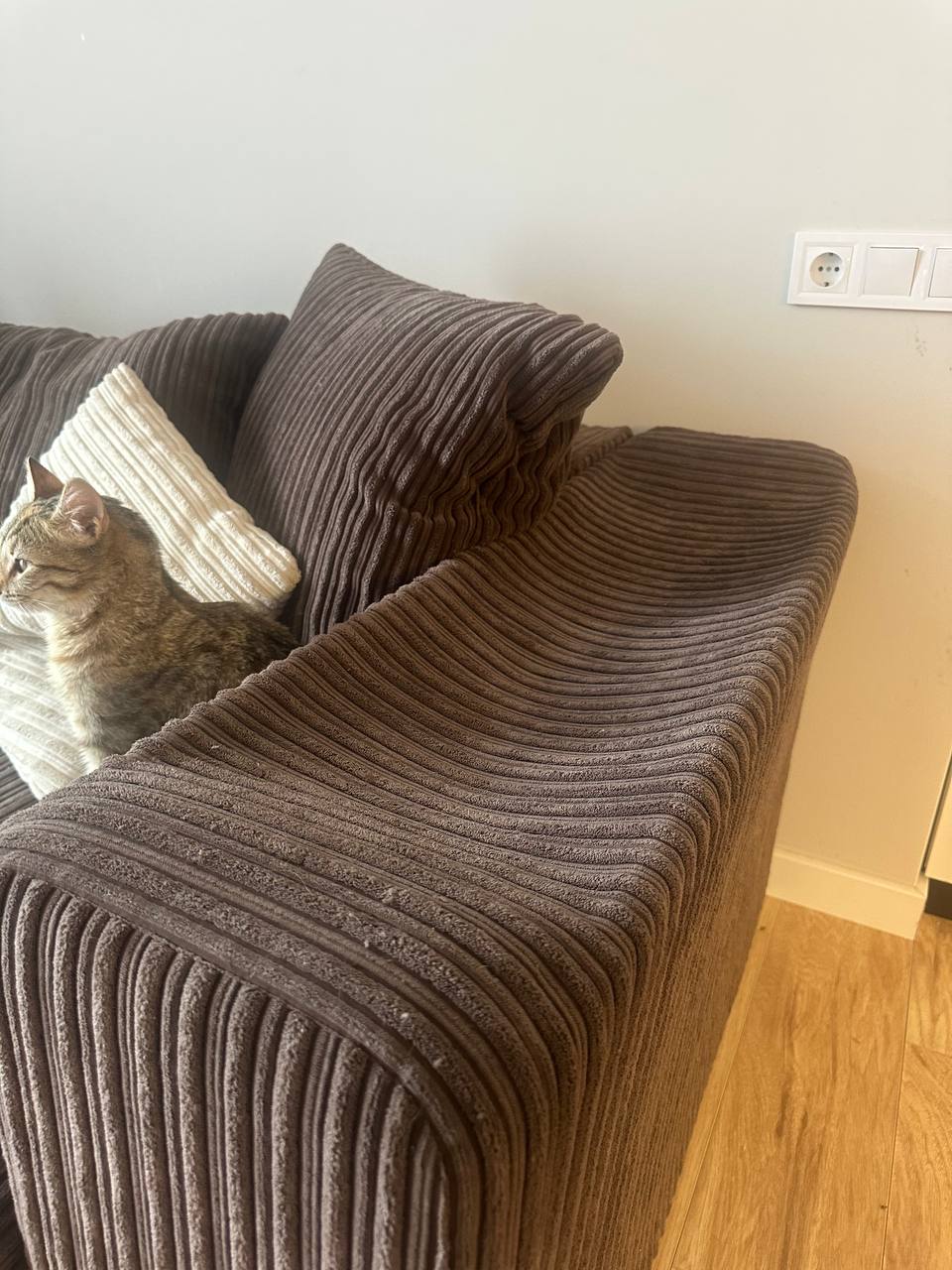
This is one of the most common questions, and the honest answer is: it depends. Blanket rules like "reupholstering is always cheaper" or "just buy new" ignore the actual variables.
Reupholstering makes sense when:
- The frame is solid hardwood — furniture built before the 1990s, particularly Soviet-era pieces, often has kiln-dried hardwood frames that will outlast several reupholsteries. Reupholstering a frame like that is a genuinely good investment. Check the frame: grab an armrest and shake it — there should be no movement or creaking. A compromised frame changes the calculation entirely.
- The piece has sentimental or antique value — a family heirloom or a genuine design piece has no like-for-like replacement.
- The sofa fits your life perfectly — if it's exactly the right size and feel, and only the upholstery is worn, reupholstering brings it back at a fraction of replacement cost.
Buying new makes more sense when:
- The frame is particleboard (MDF/chipboard) — reupholstering a three-seat sofa in Tbilisi runs approximately $150–450 (around 400–1,200 GEL). A new particleboard sofa can be less, and the frame isn't going to last significantly longer regardless.
- The springs are deformed or the seating has collapsed — spring replacement adds significantly to the cost and often tips the calculation toward buying new.
DIY reupholstery vs. hiring a professional
Reupholstery is a genuine craft that requires specific tools, pattern-cutting skills, and an understanding of furniture construction. Fabric pulled unevenly creates permanent wrinkles, uneven tension, and accelerated wear at stress points.
What you can realistically do yourself without training:
- Replace removable slipcovers on cushions
- Reupholster a simple square ottoman or bench
- Replace fabric on a flat back panel without removing the filling
What's better left to a professional:
- Any multi-section sofa with complex shapes
- Sofas with curved armrests or sculptural backs
- Any sofa bed with a pull-out mechanism
- Expensive patterned fabric — a cutting mistake costs real money
When choosing an upholsterer: ask to see a portfolio of comparable work (photos of finished sofas, not fabric samples), and clarify upfront whether filling replacement and spring work are included in the quote — these are a common source of unexpected additions to the final bill.
Upholstery fabric trends in 2025
Trends are a reference point, not a requirement. A sofa lives in your home for 10–15 years, and what looks fresh today can feel dated in five. Worth keeping in mind before committing to something very of-the-moment.
Warm earth tones — terracotta, warm beige, ochre, dusty rose, deep olive. After years of cool grey dominating interiors, the direction has shifted. These colors age well and work with a wide range of other materials.
Texture over pattern — relief weaves, woven jacquard, textured linen, dimensional chenille. Visual interest through the material itself rather than a printed design.
Dark accents — deep emerald, ink blue, mustard. The sofa as a statement piece against a neutral room.
Performance fabrics with a natural look — protected fabrics that read as linen or natural velvet but behave like engineered synthetics. Not a compromise — a considered choice.
Sustainable materials — growing interest in fabrics made from recycled polyester (rPET) and organic cotton among buyers for whom the environmental footprint matters.
Frequently asked questions
What is the most durable sofa upholstery fabric?
Full-grain leather is the durability leader — with proper care, it lasts 25 years or more. Among fabrics, Crypton and quality microfiber top the list at 50,000–100,000+ double rubs. Performance velvet from polyester also holds up well with regular maintenance.
What fabric should I choose for a sofa if I have a cat?
Flock (anti-scratch fabric) is the best choice for cat households. The short, glued-on pile gives claws nothing to grip, and most cats stop scratching it within days. Avoid leather — claw marks on leather are permanent and can't be repaired locally. Good alternatives: Crypton/AquaClean or smooth microfiber.
How much fabric do I need for a three-seat sofa?
A standard three-seat sofa 180–200 cm long requires 10–14 linear meters of fabric at 140 cm width. For patterned fabric, add 15–20% to match the repeat at seams. Your upholsterer will give you a precise figure after examining the specific sofa.
What is double rub count and what do I need for a living room sofa?
Double rub count measures how many abrasion cycles a fabric withstands before showing visible wear. In the US this is tested using the Wyzenbeek method; in Europe, Martindale is standard. For a living room sofa with regular use, the minimum you want is 30,000 double rubs — ideally 50,000 or more.
How is Crypton different from regular fabric?
Crypton is a fiber treatment technology: each thread is coated with a protective polymer before weaving. This creates a moisture, bacteria, and odor barrier built into the fabric structure — not applied on top. Standard stain-resistant fabric relies on a surface treatment that gradually wears away with cleaning. Crypton's protection lasts the life of the fabric.
What fabric works best for a balcony or terrace sofa?
For a glazed balcony or terrace, Sunbrella or other solution-dyed acrylic fabrics are the right choice. They don't fade in UV, don't suffer from moisture, and resist mold. For open outdoor spaces, polypropylene (olefin) — the material used in commercial outdoor furniture — is the most resilient option.
Is it worth reupholstering or should I just buy a new sofa?
Reupholstering makes sense when the frame is solid hardwood, the piece has sentimental or antique value, or it fits your life exactly and only the fabric is worn. In Tbilisi, professional reupholstery of a three-seat sofa runs approximately $150–450 (400–1,200 GEL) all-in. If the frame is particleboard, a new sofa often makes more financial sense. Check the frame: grab the armrests and shake — no movement, no creaking is what you want.
What do the cleaning codes W, S, WS, and X mean?
W — water-based cleaning products are safe to use. S — dry-cleaning solvents only; water causes staining or distortion. WS — both methods work. X — vacuum only, no moisture at all. For any sofa in a lived-in space, W or WS is what you want.
Which sofa fabric doesn't fade in the sun?
Solution-dyed fabrics offer the best UV resistance: the pigment is introduced into the molten fiber before it's formed, so there's nothing on the surface to fade. Sunbrella (US) and Dralon (Germany) are the main brands. Among conventional fabrics, cotton holds color better than linen or silk under sun exposure, but still falls well short of solution-dyed acrylics.
Can I reupholster a sofa myself?
Simple pieces — square ottomans, flat cushions — are manageable for a careful DIYer. A full three-seat sofa with complex shapes is a different matter: uneven tension creates permanent wrinkles and accelerates wear. Mistakes on expensive patterned fabric are costly. If in doubt, get a professional quote first.
Making the call
Choosing upholstery fabric is always a balance between four factors: durability, ease of maintenance, aesthetics, and budget. There's no universally best fabric — there's the right fabric for your specific sofa and how you actually live.
Kids and pets in the house — Crypton or AquaClean, and stop overthinking it. Sofa in direct sunlight — solution-dyed fabric, full stop. Aesthetics matter more than heavy use — natural linen or standard velvet, with realistic expectations. You want something that lasts decades — full-grain leather.
Before you commit: order samples. Feel the fabric, look at it in both daylight and artificial light, drop a few water drops on it and watch how it responds. The right fabric chosen once will serve your sofa for 10–15 years without regret. The wrong one chosen from a screen will remind you of that mistake every day.
