


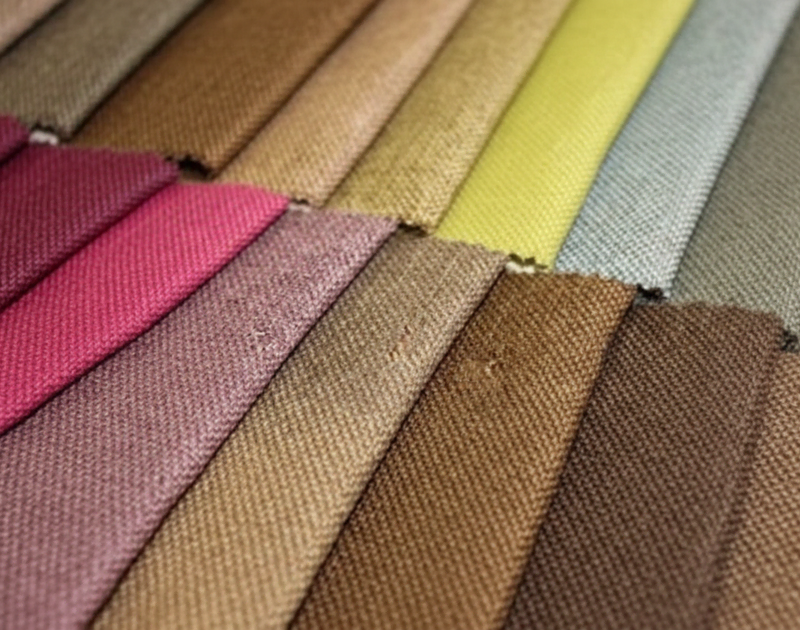
This is part of our sofa reupholstery series. Want to compare all fabric types at once? Read the complete guide to sofa upholstery fabrics.
The best fabric for a sofa in a home with a cat is flock (also called scratch-resistant or anti-claw fabric): the short, glued-on pile gives claws nothing to grip, and most cats quickly lose interest in scratching it. For dogs, the priority shifts — moisture and odor protection come first, which is where Crypton and its alternatives (AquaClean, EasyClean) shine. Leather and faux leather are popular choices, but they come with a catch: pet hair wipes off easily, but claw marks are permanent.
How pets actually damage upholstery: three mechanisms
Before choosing a fabric, it helps to understand what's actually happening to your sofa. There are three distinct processes at work, and different fabrics protect against each of them differently.
Mechanical damage from claws
Cats scratch vertical surfaces out of instinct, not spite — it's territorial behavior. They need to grip and pull. On standard woven fabrics, this works perfectly: a claw catches a thread and pulls it out, leaving a snag or a tear. On flock, it doesn't work at all: the pile is too short and is glued perpendicular to the base — there are no threads to catch.
Dogs scratch surfaces less often, but large breeds — Labradors, Huskies, German Shepherds — can leave claw marks when jumping onto the sofa. For them, claw damage is less of a concern than it is with cats.
Moisture: wet paws, drool, and accidents
Wet paws after a walk, drool from a dog lying next to you, the occasional accident — this is everyday reality for dog owners. Most fabrics absorb moisture, and when a sofa gets wet repeatedly, bacteria multiply inside the fabric, odors develop, and eventually the sofa's filling starts to break down.
With cats, moisture is less of an ongoing issue, though it becomes relevant with sick or elderly animals. Fabrics with water-repellent technology protect not just the surface, but also keep moisture from soaking through to the filling.
Fur and odors
Fur isn't just an aesthetic problem. In textured fabrics — chenille, looped velvet, bouclé — pet hair literally weaves itself into the structure and won't come out even with a vacuum. On smooth fabrics — microfiber, leather, flock — fur sits on the surface and wipes off easily with a damp hand or a brush.
Odors are a separate issue. Most fabrics gradually absorb pet smell into the fiber itself. Fabrics with barrier protection (Crypton, AquaClean) prevent odors from penetrating the fiber at all — a real advantage that becomes obvious after a year of living with a dog.
Best fabrics for a sofa with a cat
Flock (anti-scratch fabric) — the number one choice
Flock is made differently from conventional fabrics. A dense base (cotton or synthetic) is coated with ultra-short pile — 0.5–1 mm long — using an electrostatic process. The pile stands vertically, perpendicular to the base. A cat's claw has nothing to hook onto: no threads, no weave, nothing to pull.
In practice, most cats stop using a flock sofa as a scratching post within a few days. The surface is pleasant to the touch — similar to velvet — holds its shape well, and cleans up easily. Most everyday stains wipe off with a damp cloth.
One important note: flock quality varies significantly between manufacturers. Cheap flock wears through to the base quickly in high-pressure areas — seat cushions, armrests. Before ordering, ask for a sample and rub it firmly with a coin a few dozen times. Quality flock won't show any damage.
Durability: 25,000–40,000 double rubs (Wyzenbeek or Martindale depending on manufacturer). Cleaning code: typically W.
→ Price: $8–25 per meter (22–69 GEL) — one of the most affordable options available.
Crypton, AquaClean, and their alternatives
Crypton is a patented American technology: a protective polymer is applied to each individual fiber before weaving, creating a built-in barrier against moisture, bacteria, and odors. In Georgia and across most of Europe, original Crypton is hard to find and expensive. The good news is that solid alternatives are readily available:
- AquaClean (Spain) — one of the best accessible technologies. Most stains come out with water alone. Available in a wide range of textures and colors.
- EasyClean and SmartClean — umbrella marketing terms for fabrics with similar barrier protection. Always ask your supplier whether the protection is built into the fiber or just applied to the surface — it makes a significant difference.
- Teflon coating (DWR/Teflon) — applied to finished fabric. It works, but it's a step down: the protection is surface-level and fades with each wash or cleaning.
For cats, Crypton-type fabrics don't match flock when it comes to claw resistance — but they're unmatched for odor and moisture protection. If your cat uses a scratching post and the main issues are smell and fur, AquaClean is an excellent choice.
Smooth microfiber — the budget-friendly compromise
Smooth microfiber (the kind that resembles suede) is a reasonable option for cat owners on a budget. Pet hair wipes off the smooth surface easily with a damp hand or soft brush. Scratch marks are less visible than on leather, though they do accumulate over time.
Don't confuse it with fluffy or plush microfiber — that type actually traps hair in the pile. When shopping, be specific: you want smooth (suede-like) microfiber, not the soft, velvety kind.
→ Durability: 50,000–100,000 double rubs. Price: $7–20 per meter (19–55 GEL).
Performance velvet — with caveats
Dense performance velvet made from polyester can work in homes with cats — but only if the pile is very tight and short. On a matte velvet surface, claw marks are less obvious than on smooth leather. That said, snags will still appear eventually; it's just a matter of how active your cat is.
If your cat scratches furniture only occasionally and has an alternative scratching post nearby, performance velvet can hold up for several years without serious damage. If your cat is an aggressive scratcher, flock is the safer bet.
Why leather is a poor choice for cat owners
This is the most common misconception when choosing sofa fabric. "Leather is easy to clean and pet hair doesn't stick to it" — both true. But there's one irreversible downside: claw marks on leather are permanent. No local repair, polish, or leather conditioner will remove them. A leather sofa that's lived with a cat for a year looks like it's been worked over with sandpaper.
Faux leather (PU) is even worse in this regard: claw marks combine with cracking to create patches where the material starts to peel away. Within two or three years, the sofa looks beyond saving.
Bottom line: if you have a cat, avoid leather and faux leather. Flock, Crypton/AquaClean, or smooth microfiber are your real options.
Best fabrics for a sofa with a dog
With dogs, the priorities shift. Claws are only a concern with large breeds. The main enemies of your sofa are moisture (wet paws, drool), odors, and the physical wear from jumping and constant repositioning.
Crypton / AquaClean — the best choice for dogs
Barrier technology built into the fiber is exactly what you need when you live with a dog. Wet paws from a rainy walk won't soak through to the filling, and that distinctive dog smell won't build up in the fabric. The fabric also stays breathable — unlike leather, it won't feel hot in summer.
AquaClean is widely available across Europe in a broad range of options, including convincing imitations of linen, tweed, and velvet. These fabrics look identical to standard upholstery — until something spills on them.
Full-grain leather — practical, but expensive
Leather is a legitimate option for dog owners, especially if the breed doesn't leave claw marks. Hair doesn't cling to the surface, spills wipe off easily, and odors don't soak in deeply. The downsides: the price, the cold feel in winter, and the need for regular conditioning. With a large dog that has sharp claws, you're looking at the same scratch risks as with cats.
Smooth microfiber — budget-friendly and practical
Handles fur well, cleans easily, and offers high durability. The downside is that it does absorb odors. Regular cleaning with appropriate products and good ventilation are non-negotiable. For small breeds with minimal drooling, it's a perfectly workable choice.
What to avoid with dogs
- Natural linen — absorbs moisture instantly; wet paw prints are nearly impossible to remove without professional cleaning
- Chenille — dog hair weaves itself into the looped pile and won't come out. Within a few months, the fabric starts to look like a felted dog blanket
- Standard velvet — same problems as chenille: fur, moisture, and odors all accumulate in the pile
Comparison table: fabrics for homes with pets
|
Fabric |
Cat claws |
Pet hair |
Odor / moisture |
Cleaning |
Overall verdict |
|---|---|---|---|---|---|
|
Flock (anti-scratch) |
Excellent — nothing to grip |
Easy to wipe off |
Good |
Easy (W) |
✅ Best choice for cats |
|
Crypton / AquaClean |
Good — dense structure |
Easy |
Excellent |
Very easy (W) |
✅ Best for odors and moisture |
|
Smooth microfiber |
Fair — scratches less visible |
Easy (smooth surface) |
Fair |
Easy (W/WS) |
✅ Budget-friendly compromise |
|
Performance velvet |
Fair — marks less visible on matte |
Fair |
Fair |
Easy (W/WS) |
⚠️ Acceptable with dense pile |
|
Full-grain leather |
Poor — scratches are permanent |
Easy to wipe off |
Good |
Easy |
❌ Not suitable for cats |
|
Faux leather (PU) |
Poor — scratches + cracking |
Easy to wipe off |
Good |
Easy |
❌ Worst option |
|
Chenille |
Poor — constant snags |
Poor — hair gets trapped |
Poor |
Difficult |
❌ Avoid |
|
Standard velvet |
Poor — snags immediately |
Poor |
Poor |
Difficult (S) |
❌ Avoid |
|
Natural linen |
Poor — tears easily |
Fair |
Poor |
Difficult (S) |
❌ Avoid |
Beyond the fabric: what to do after you've chosen
A scratching post near the sofa — non-negotiable
Even the toughest flock won't solve the problem if your cat has nowhere else to scratch. Place a scratching post right next to the sofa and train your cat to use it from day one. This works better than any scratch-resistant material on its own.
Teflon coating on any fabric
Even if you've chosen a standard fabric, applying a Teflon spray before use significantly reduces how quickly stains set in. The spray comes in aerosol cans and needs to be reapplied every 6–12 months. It's not a substitute for built-in fiber protection, but it genuinely helps.
Removable slipcovers as a strategy
Some pet owners simply choose sofas with removable covers and throw them in the wash regularly. If the sofa design allows for it, this works well. A linen or cotton slipcover that gets washed once a month is a completely honest approach for the most active households.
Frequently asked questions
What is flock fabric and why don't cats scratch it?
Flock is a fabric where the pile isn't woven into the base — it's glued on using an electrostatic process. The pile stands vertically at 0.5–1 mm tall, giving a cat's claw nothing to grip: no threads, no weave structure. Most cats stop scratching a flock sofa within the first week.
Can I get a leather sofa if I have a cat?
It's not recommended. Claw marks on leather are permanent and cannot be repaired locally. If your cat is fully trained to use a scratching post and never touches furniture, leather is technically fine. If not — go with flock or AquaClean.
Which fabric is best at eliminating dog odor?
Fabrics with built-in fiber barrier protection handle odors best: Crypton, AquaClean, EasyClean. Odor can't penetrate the fiber, and the surface wipes clean easily. Full-grain leather also holds up reasonably well against odors. Natural linen, chenille, and standard velvet are the worst choices — odors build up quickly and are very hard to remove.
How do I get pet hair off my sofa?
A rubber brush, a damp rubber glove, or a lint roller all work well. Smooth fabrics — suede-like microfiber, leather, flock — are dramatically easier to clean than textured ones like chenille or velvet. Factor this in as a separate criterion when choosing your fabric.
What's the difference between flock and AquaClean?
Flock protects against claws through its structure — there's nothing for claws to catch. AquaClean protects against moisture and stains through a barrier treatment applied to the fiber. These are two different mechanisms. For cats, flock is the priority. For dogs, AquaClean is the priority. Ideally, use flock with an added Teflon coating for both.
How long does flock last with regular use?
Quality flock holds up to 25,000–40,000 double rubs. In a home with one cat or a small dog, that translates to around 5–8 years of normal use. The weak spots are the seat cushions and armrests, where pressure is highest. Before buying, test a sample: rub it firmly with a coin several dozen times — the pile shouldn't come off.
Quick decision guide
Cat that scratches furniture → flock (anti-scratch). Put a scratching post right next to the sofa.
Dog, main concern is moisture and odor → AquaClean, Crypton, or equivalent. Full-grain leather as a second option.
Both a cat and a dog → flock + Teflon coating, or AquaClean with a dense, tight structure.
Tight budget → smooth microfiber (suede type) + Teflon spray applied before first use.
Don't want to think about maintenance at all → AquaClean or Crypton, and relax.
No fabric will make your sofa indestructible. But choosing the right material for your pets will save you real money — and a lot of frustration — over the next several years.
